A top-sealing chimney damper is one of the most practical, immediately impactful, and cost-effective upgrades available to homeowners with fireplaces in Copiague, NY. While a standard throat damper sits just above the firebox and attempts to seal the flue from below, a top-sealing damper mounts at the very top of the chimney and creates a weather-tight closure at the flue opening itself. At amityvillechimney.com, we install top-sealing dampers throughout Copiague and across Suffolk County, NY, and the feedback from our customers is almost universally the same: the difference in comfort, draft performance, and energy efficiency is noticeable from the very first season after installation.
The central problem with traditional cast-iron throat dampers is that they cannot seal completely, regardless of their condition or age. Even a well-maintained throat damper with a properly seating plate allows a measurable volume of conditioned air to escape up the flue continuously, and most throat dampers develop warping, corrosion, or mechanical damage over years of use that make their sealing performance progressively worse. In winter, this means warm air that you have paid to heat is rising out of your home around the clock through the chimney. In summer, hot and humid outdoor air flows down through the flue and into your living space, increasing the load on your cooling system. The Department of Energy estimates that a leaking or open chimney damper can account for up to thirty percent of a home's heating and cooling loss, which in Copiague and throughout the Long Island region translates to a meaningful ongoing energy cost.
Top-sealing dampers eliminate this problem definitively. The damper plate seals against a silicone gasket at the top of the flue tile, creating an airtight closure when the fireplace is not in use. This seal stops all air infiltration from above, whether cold winter air driving down the flue or warm summer air doing the same. Homeowners in Copiague who replace failing throat dampers with top-sealing units frequently report immediate reduction in winter drafts near the fireplace, reduced heating costs, and in summer, a marked improvement in the indoor air quality and comfort of rooms adjacent to the fireplace.
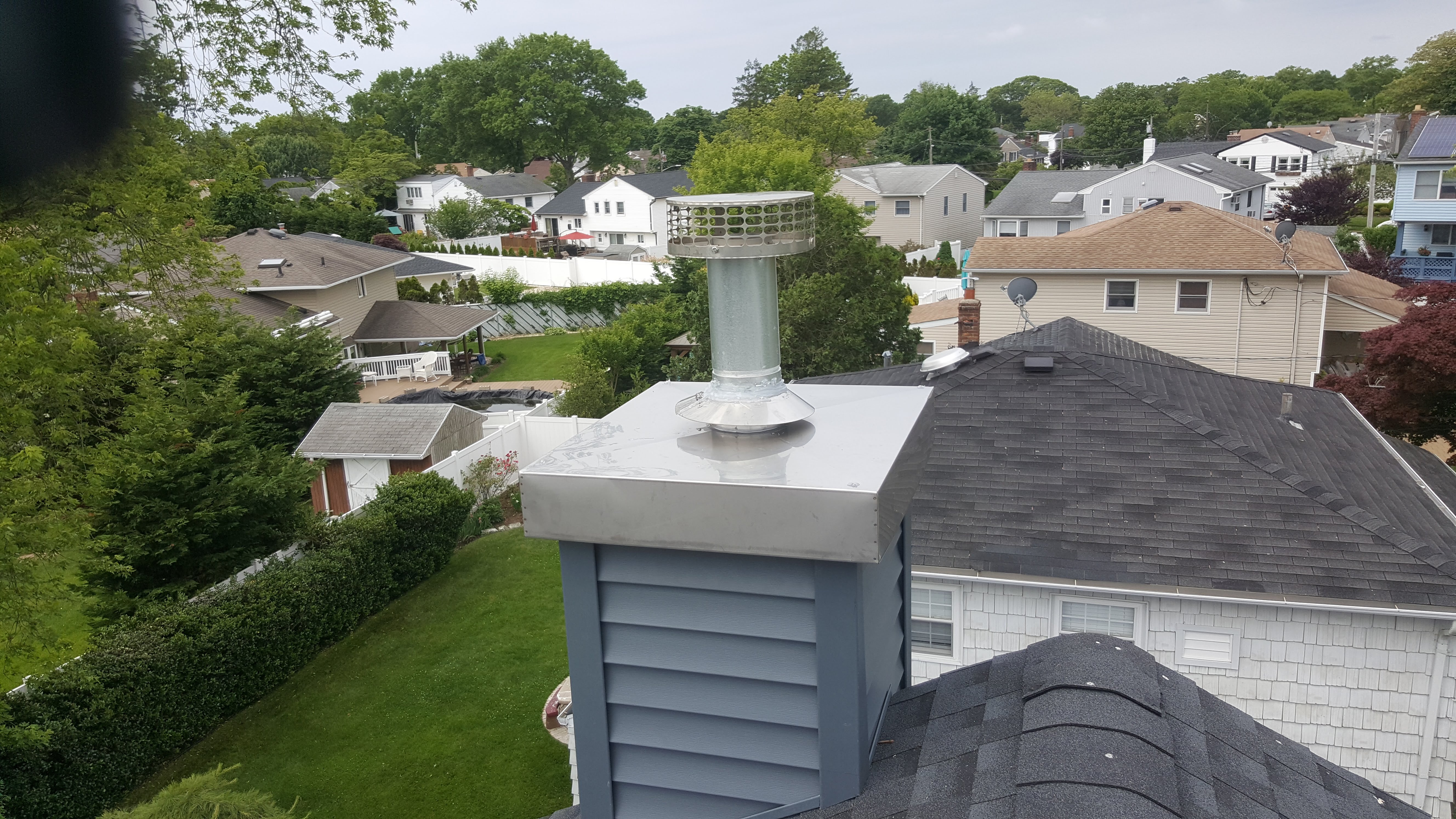
Top-sealing dampers also function as chimney caps, providing all the protective benefits of a cap simultaneously with their damper function. They prevent rain and snow from entering the flue, exclude birds and animals from nesting inside the chimney, and block leaves and debris from accumulating in the flue. This dual function makes them an exceptionally cost-effective product. Installation in Copiague starts at $855+ and the energy savings alone typically offset the investment within one to two heating seasons for homes in Suffolk County, NY.
The damper is operated simply and conveniently from inside the home via a stainless steel cable that runs down through the flue and connects to a small mounting bracket near the fireplace opening. To open the damper before lighting a fire, you pull the cable handle. To close it after the fire has fully extinguished and the firebox has cooled, you push the handle back to the locked position. The mechanism requires no tools, no maintenance, and no adjustment. The damper itself is constructed from heavy-gauge galvanized or stainless steel depending on the model and is engineered to withstand years of weather exposure and heat cycling.
For homeowners in Copiague with an existing throat damper that is warped, corroded, or no longer operating correctly, a top-sealing damper provides a complete solution without requiring removal of the old throat damper in most cases. We simply wire the existing throat damper in the permanently open position, and the new top-sealing unit takes over all sealing and weather-exclusion functions from above. This approach is cleaner, faster, and less expensive than a full throat damper replacement.
All damper installations are performed by our trained technicians carrying All services provided by DME Maintenance · Suffolk County License #H-43223 | All services provided by DME Maintenance · Nassau County License #H0101570000. We work safely from the rooftop and complete most installations within two hours. Call amityvillechimney.com at 631-316-0622 today to schedule your top-sealing damper installation in Copiague and start enjoying a more comfortable, energy-efficient home.
For homeowners in Copiague who are uncertain whether their existing throat damper is the source of their draft and energy problems, there is a simple test you can perform. On a cold day with no fire burning, hold a lit stick of incense or a thin piece of tissue near the closed damper and watch for movement. Any noticeable movement of the smoke or tissue indicates air infiltration through the damper. A properly functioning damper should eliminate all air movement when fully closed. If you observe significant air movement through a closed damper, you are losing conditioned air through that opening year-round.
Top-sealing dampers are compatible with all standard masonry fireplace configurations and most prefabricated or zero-clearance fireplace systems with masonry chimneys. Before installing, our technicians verify compatibility with your specific flue configuration and appliance type to ensure the damper will function correctly and meet any applicable code requirements. For fireplace inserts or stove installations where the firebox connects to a liner system, we assess the installation requirements carefully and ensure the damper configuration is appropriate.
Many homeowners in Copiague also combine top-sealing damper installation with a chimney cap replacement or crown repair, addressing the full range of top-of-chimney maintenance needs in a single visit. We offer bundled pricing for combined services that makes this approach even more cost-effective. Scheduling these services together also minimizes the number of times our crew needs to access your roof, which is a practical benefit during busy fall service periods throughout Suffolk County, NY. Call amityvillechimney.com at 631-316-0622 to discuss your options.
If you have been tolerating a drafty fireplace, high heating bills, or a throat damper that no longer closes properly, a top-sealing damper installation is the solution that addresses all of these problems in a single, affordable service call. amityvillechimney.com installs top-sealing dampers throughout Copiague and across Suffolk County, NY. Our technicians carry All services provided by DME Maintenance · Suffolk County License #H-43223 | All services provided by DME Maintenance · Nassau County License #H0101570000, work safely and efficiently, and leave your home clean and ready to enjoy. Call 631-316-0622 today to schedule your installation and experience the difference a properly sealed chimney makes.