Chimney repair is one of those home maintenance needs that tends to go unaddressed until a manageable problem becomes a major and expensive one. At amityvillechimney.com, we have been diagnosing and repairing chimneys throughout Copiague, NY and the surrounding communities of Suffolk County, NY since 2001, and we know from experience that addressing chimney damage early almost always saves our customers significant time, money, and stress compared to waiting until damage becomes severe.
The most common chimney repairs we perform in Copiague involve mortar joint deterioration, damaged chimney crowns, cracked or spalling flue tiles, spalling exterior brick, and water infiltration damage. Each of these problems tends to develop gradually over years of freeze-thaw cycling, which is particularly aggressive in the Long Island climate. What begins as a hairline crack in a mortar joint can expand over two or three winters until water penetrates the chimney structure, migrates into the surrounding wall framing, and causes wood rot, mold growth, or even structural compromise to the home itself. By the time water stains appear on a ceiling near the chimney, or wallpaper begins peeling on an adjacent interior wall, significant hidden damage is frequently already present.
Our chimney repair process in Copiague always begins with a comprehensive inspection. Depending on the symptoms and the age of the chimney, we may use detailed visual examination, tapping tests to identify hollow or loose masonry, and where warranted, video camera scanning of the flue interior to get a complete picture of its condition from top to bottom. We document every defect we find with photographs and provide you with a clear, written assessment before any repair work begins. We do not pressure customers into unnecessary repairs. We explain exactly what we found, why it matters, and what your options are, and we let you make the decision.
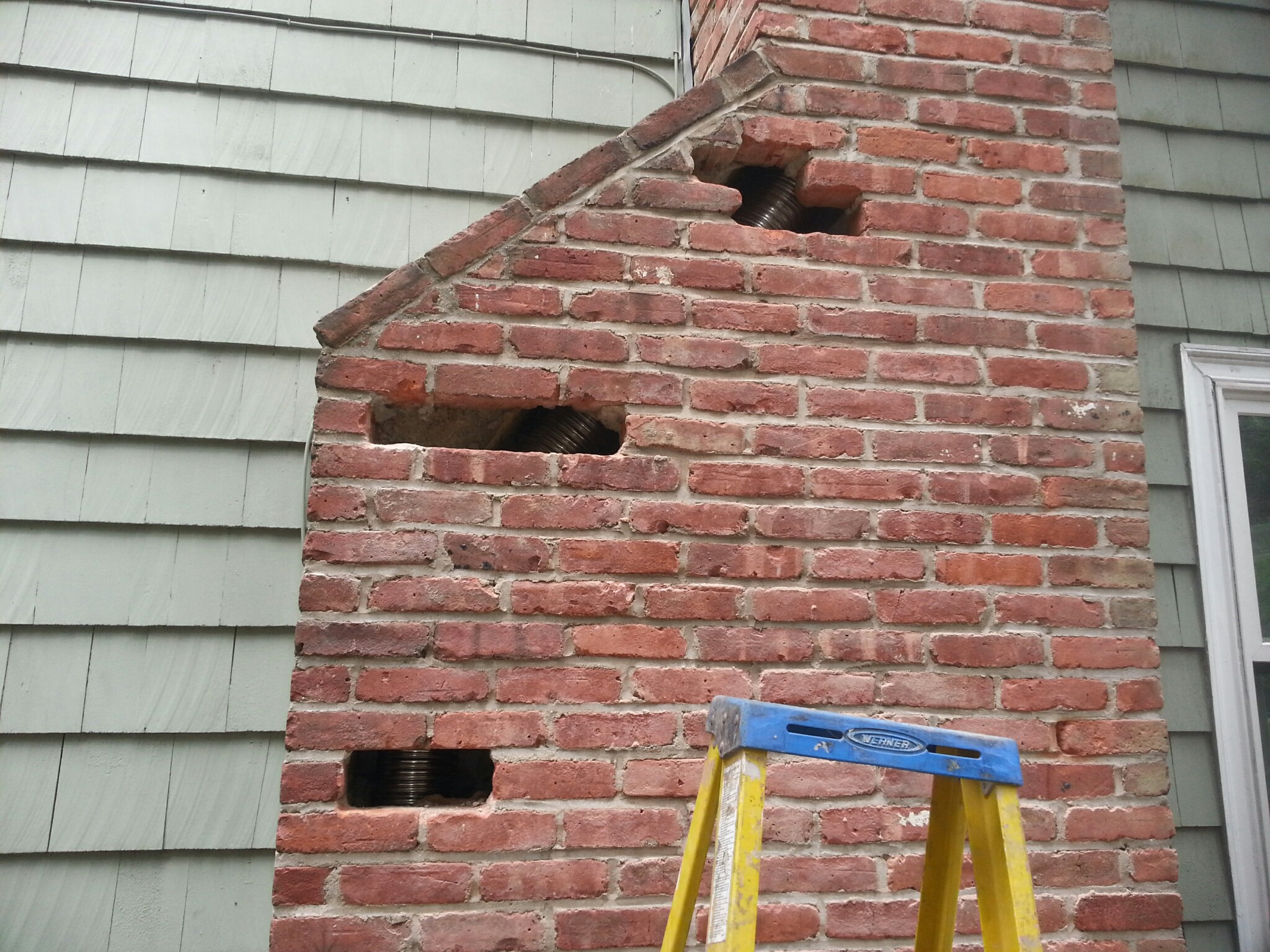
Brick and mortar repair, commonly called tuckpointing or repointing, is among our most frequently requested services in Copiague. Over time, the mortar joints between your chimney's bricks erode from weathering and allow water to penetrate deep into the masonry. Left unaddressed, this moisture works its way through the chimney structure, causing bricks to crack, spall, and eventually separate from the assembly. Our tuckpointing work removes all deteriorated mortar to the required depth, prepares joints properly, and packs fresh mortar matched to the color and strength of your original material. The result restores the structural integrity and water resistance of your chimney and significantly extends its useful life.
Flue tile cracking and failure is another serious repair need we address regularly in Copiague and across Suffolk County, NY. Clay flue tiles are the liner sections inside your chimney that contain heat and combustion gases and direct them safely out of the home. When tiles crack from thermal shock, chimney fire damage, or foundation settling, they create pathways for heat and carbon monoxide to escape through the gaps and into adjacent wall framing and living spaces. Depending on the extent of the damage, cracked tile liners may be repaired with a poured liner system or replaced entirely with a new stainless steel flexible liner, which is actually a more durable and long-lasting solution than the original clay tile.
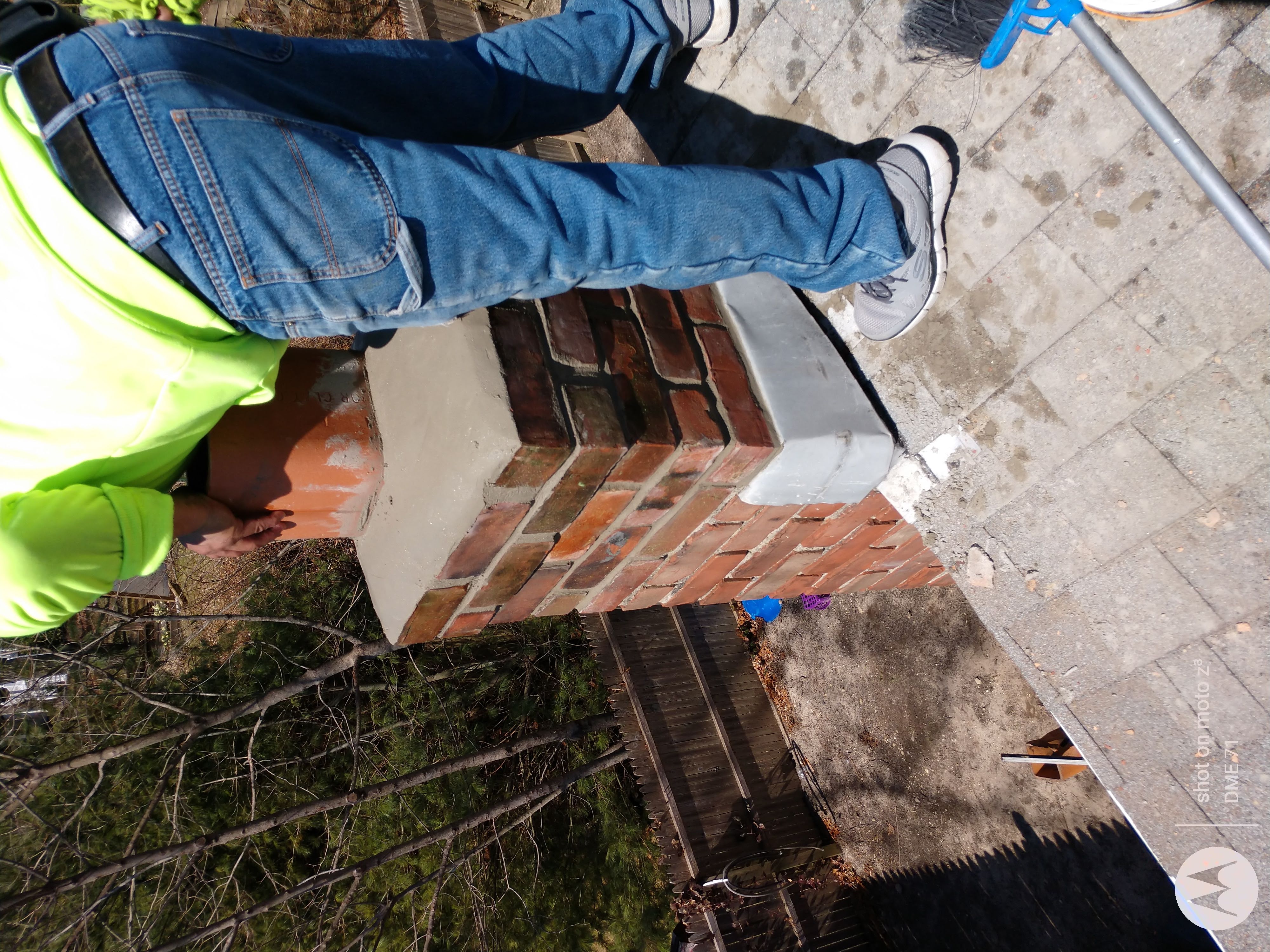
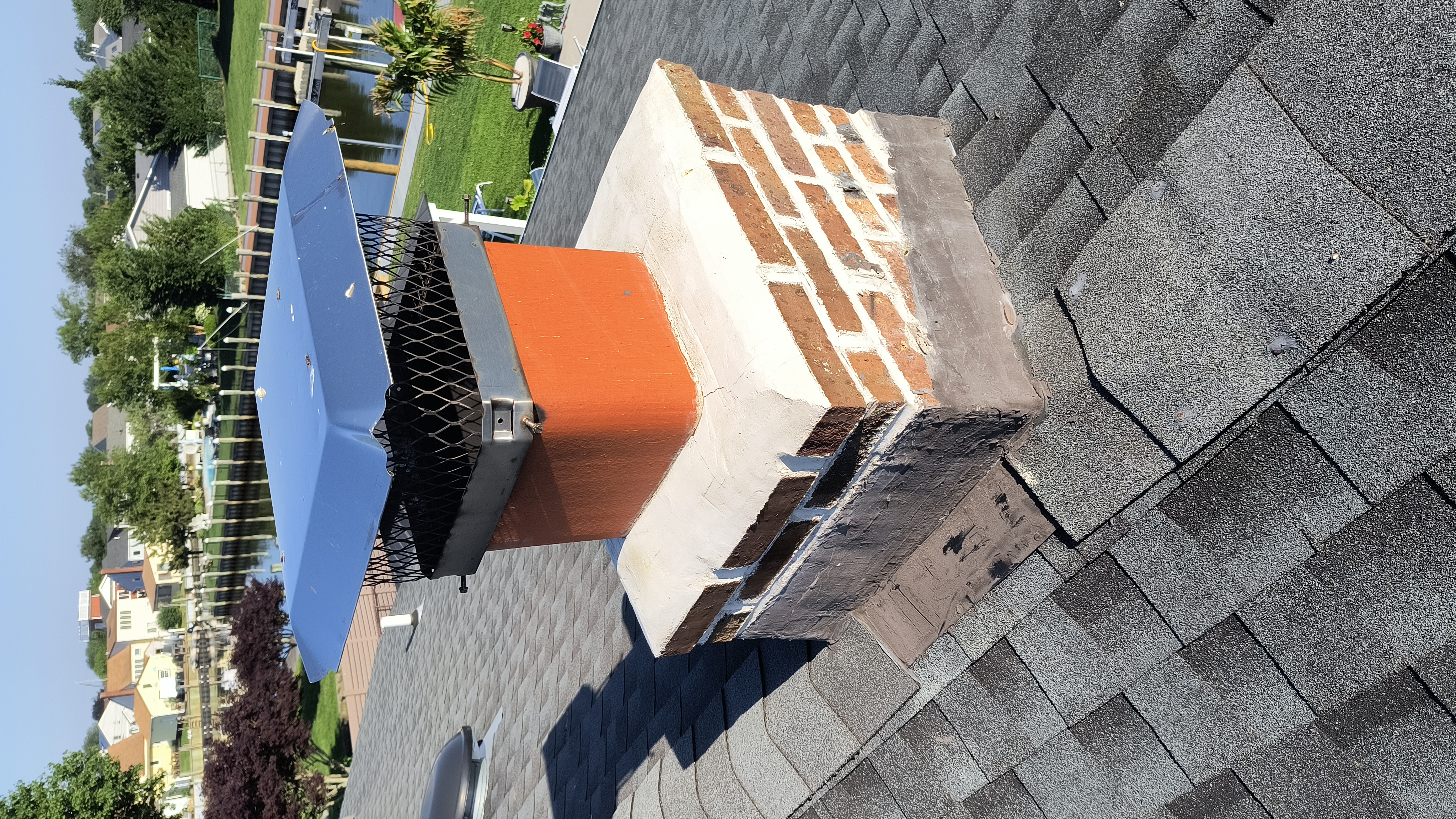
Water damage is among the most complex chimney repair scenarios we handle in Copiague. Water is the single greatest long-term enemy of masonry chimneys, and when it gains entry through multiple pathways simultaneously, the damage can affect every component of the system. Our water damage repairs typically address several issues in the same visit: rebuilding or resurfacing the damaged crown, replacing or re-sealing deteriorated flashing at the roof line, repointing eroded mortar joints throughout the exterior, and applying a professionally-rated breathable waterproofing sealer to the masonry surface. Done correctly, this comprehensive approach can add decades to your chimney's functional life.
For chimneys requiring partial or full structural rebuilding, our experienced masons complete the work to the same standards used in original construction, matching brick color, size, and bond pattern as closely as possible to preserve the appearance of your home. We obtain any required permits, work safely and efficiently, and clean up completely before leaving your property in Copiague.
All repair work is performed under All services provided by DME Maintenance · Suffolk County License #H-43223 | All services provided by DME Maintenance · Nassau County License #H0101570000 and fully insured. We provide written estimates before beginning any job and written documentation after completion. If your chimney shows visible cracking, spalling brick, crumbling mortar, white efflorescence staining, water in the firebox, or staining on ceilings near the chimney, do not delay. Call amityvillechimney.com in Copiague at 631-316-0622 today. The cost of early repair is a fraction of what deferred maintenance ultimately demands.
Another repair category we handle frequently throughout Copiague is chimney flashing failure. Flashing is the metal barrier, typically aluminum, galvanized steel, or lead-coated copper, installed at the intersection of your chimney and your roof to prevent water from entering at that critical junction. Properly installed and maintained flashing is one of the most important waterproofing elements on the entire exterior of your home. But flashing installed with inadequate overlap, improper sealing, or incompatible caulking materials deteriorates and separates from the masonry over time, opening a pathway for water to enter directly into your attic or the wall assembly behind your chimney. We inspect flashing on every chimney repair visit and reseal or replace it as needed.
For homeowners in Copiague who are preparing to sell their home, a pre-listing chimney inspection and repair is a worthwhile investment. Home inspectors flag chimney defects routinely, and chimney-related findings in a home inspection report frequently become points of negotiation that cost sellers more at closing than the repairs themselves would have cost before the listing. We work with homeowners throughout Suffolk County, NY who want their chimney in documented, repaired condition before going to market, and we can typically complete most standard repairs within a week of our initial inspection.
We also repair smoke chambers, the masonry funnel above the damper that directs smoke into the flue. Smoke chambers are frequently left rough or corbelled in older construction, which creates turbulence and deposits. We can apply a smoke chamber parge coat, a smooth refractory mortar coating, to improve draft and seal any cracks or gaps in this critical area. Call amityvillechimney.com at 631-316-0622 in Copiague for your free repair estimate.